








Electrician Career Overview and Education Pathways
Electricians play a key role in keeping homes, businesses, and industrial systems powered and operating safely. This field may appeal to those who like working with their hands, using tools, and tackling real-world technical problems across various environments.
Whether you plan to become an electrician in California or are researching how to become an electrician in Arizona, the path typically includes a combination of education, supervised work, and meeting state-specific requirements. Depending on the state, this may include electrician certification (such as in California) or contractor licensing (such as in Arizona).
This guide walks through important information to help you understand the role and explore your options.
What is an Electrician?
An electrician is a skilled trades professional who works with electrical systems in residential, commercial, and industrial settings. They are trained to install, maintain, and repair wiring, equipment, and control systems that deliver electricity throughout buildings.
What Does an Electrician Do?
Electricians install, inspect, maintain, and repair electrical systems, including wiring, lighting, and equipment, to support safe and reliable operation.
Common Responsibilities
Electricians may perform a range of tasks, including:
- Installing electrical systems: Wiring, lighting, and control systems
- Inspecting components: Checking panels and equipment for safety
- Maintaining and repairing systems: Fixing faulty wiring or devices
- Reading blueprints: Planning system layouts
- Testing and troubleshooting: Identifying electrical issues
- Following safety codes: Adhering to standards such as the National Electrical Code (NEC), which is adopted by many jurisdictions. (1)
Where Electricians Work
Electricians may work in:
- Residential homes
- Commercial buildings
- Industrial facilities
How to Become an Electrician (Step-by-Step)
To become an electrician, you typically complete training, gain supervised work experience, and meet state-specific requirements, which may include electrician certification or contractor licensing, depending on where you plan to work.
Here are the typical steps:
1. Complete Education or Training
Start by building foundational knowledge in electrical systems, safety, and tools. Training programs can help introduce the skills you need to be an electrician, including installation, troubleshooting, and safety practices.
2. Register or Work as a Trainee
In some states, you may need to register as an electrician trainee or work under supervision. Requirements vary depending on location, including whether you plan to become an electrician in Arizona or California.
3. Gain Required Work Experience
Hands-on experience is a key part of meeting job requirements for electrician roles. In California, individuals must complete a state-defined number of supervised work hours (often several thousand, depending on certification type) before qualifying for certification. (2) In Arizona, experience requirements vary depending on the type of work and whether you plan to pursue a contractor license through the Arizona Registrar of Contractors. (3)
4. Pass a Certification or Licensing Exam
Requirements at this stage depend on the state. For California electrician certification requirements, electricians working for a C-10 licensed contractor must obtain state certification by meeting experience requirements and passing a certification exam. (2) In Arizona, electricians are not licensed at the journeyman level by the state; instead, individuals who wish to operate independently must obtain a contractor license, which may include exams and other requirements set by the Arizona Registrar of Contractors. (3)
5. Continue Building Experience on the Job
As you gain experience, you may take on more responsibility or specialize in different areas of electrical work.
Requirements to become an electrician vary by state and role. Find more information in our California and Arizona guides. Be sure to check the most current guidelines for the state where you plan to work.
 Why Become an Electrician
 Why Become an Electrician
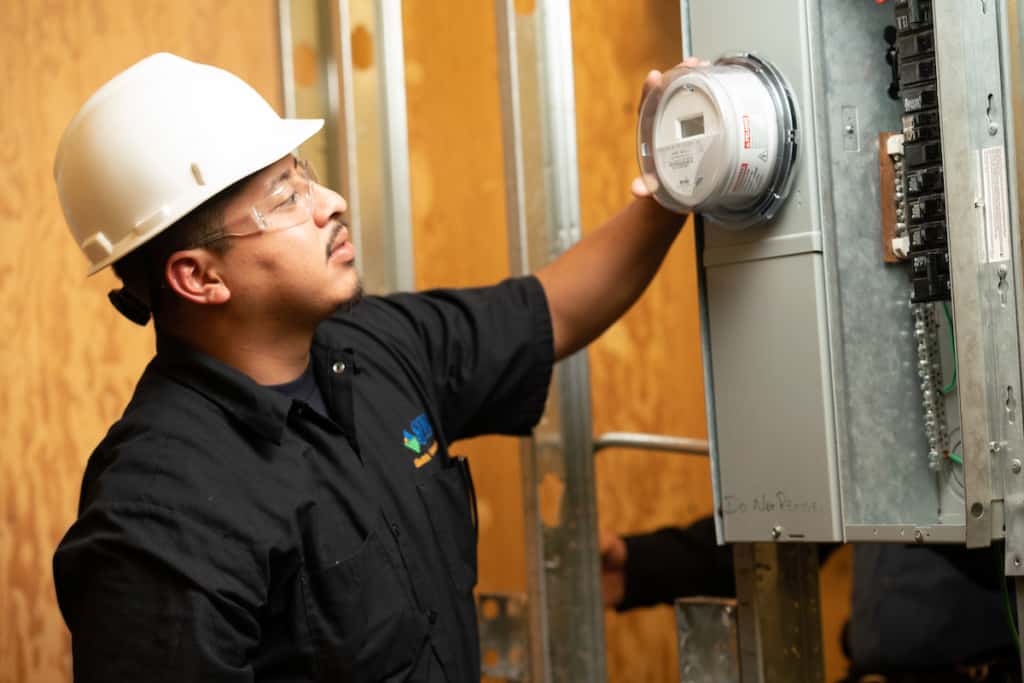
Working as an electrician can appeal to individuals who enjoy hands-on work, problem-solving, and building practical skills used across many industries.
According to the U.S. Bureau of Labor Statistics, electricians are part of a broad occupational group that supports residential, commercial, and industrial infrastructure. (4) Employment trends can vary based on factors such as location, construction activity, and energy needs.
Electricians may work in a range of environments and may have opportunities to develop experience in different types of electrical systems, including residential wiring, commercial installations, and industrial equipment. Some may also work with newer technologies, such as solar or other energy systems, depending on their training and experience.
As electricians gain experience, they may take on additional responsibilities or focus on specific types of work within the field.
Types of Electricians
Electricians can specialize in different types of work depending on the setting, systems, and level of experience. Each type focuses on specific electrical needs across residential, commercial, or industrial environments.
Common types of electricians include:
-
Residential electricians
Work in homes installing and maintaining wiring, lighting, outlets, and electrical panels. -
Commercial electricians
Handle electrical systems in offices, retail spaces, schools, and other business environments. -
Industrial electricians
Work in manufacturing or industrial facilities, maintaining machinery, control systems, and equipment. -
Maintenance electricians
Focus on inspecting, troubleshooting, and repairing existing electrical systems to keep them operating properly. -
Construction electricians
Install electrical systems in new buildings, often working from blueprints during early phases of construction. -
Control electricians
Often called controls or industrial automation technicians, they specialize in automated systems and controls used in industrial or large-scale operations.
Electrician Training at SJVC: What to Expect
Training can help you build foundational knowledge and hands-on experience. SJVC’s Electrical Technology program is designed to introduce core concepts used in residential, commercial, and industrial settings.
What You May Learn
Coursework may include:
- Electrical safety practices
- Installation and maintenance of wiring systems
- Troubleshooting techniques
- Electrical systems across environments
Electrician Classes
SJVC’s Electrical Technology curriculum includes a set of courses designed to build practical skills used in the field. Students in the program may take courses such as:
- Electrical Conduit Bending & Raceway Systems This course is a study of raceway materials common in the electrical industry, including proper applications and installation. Students will also calculate, lay out, and bend Electrical Metallic Tubing (EMT) and Rigid Metal Conduit (RMC) per industry and National Electrical Code standards.
- Blueprint Reading & Safety for Electricians This course seeks to develop in students an appreciation for two conceptual and practical skills necessary in an electrician’s career: building plans and safety. Students will learn to interpret residential and commercial architectural and mechanical plans used in the electrical industry. Instruction regarding electrical and construction safety practices will culminate in students having the opportunity to earn OSHA-10 Hour Construction, CPR, and First Aid certifications.
- Technical Math and Electric Circuits This course is a study of mathematics used in the electrical trade with an application of direct and alternating current.
- Residential Wiring This course introduces the student to the elements of residential-type construction with an emphasis on wiring principles and basic residential design. This course also allows the student to perform a “hands-on” component of wiring a basic residential structure. Both components of this course are completed in strict accordance with the requirements of the National Electrical Code.
- Commercial Wiring This course covers the theory and application of electrical wiring systems utilized in commercial buildings inclusive of general wiring and raceway systems, lighting systems, low voltage systems, overcurrent and grounding protection, electrical distribution systems, and load calculations, all in adherence to the requirements of the National Electrical Code.
- Industrial Wiring This course covers the theory and application of electrical wiring systems utilized in industrial buildings inclusive of general wiring and raceway systems, lighting systems, low voltage control systems, alternating current motors and transformers, and load calculations, all in adherence to the requirements of the National Electrical Code.
- Programmable Logic Controllers / Industrial Electronics This course presents the basic concepts and applications of PLCs, including PLC language, installation and diagnostic procedures, programming tools, basic communication methods, and logic operations. Students will gain hands-on experience in creating, testing, and troubleshooting PLC controlled systems.